The Devil
Major Arcana
Upright
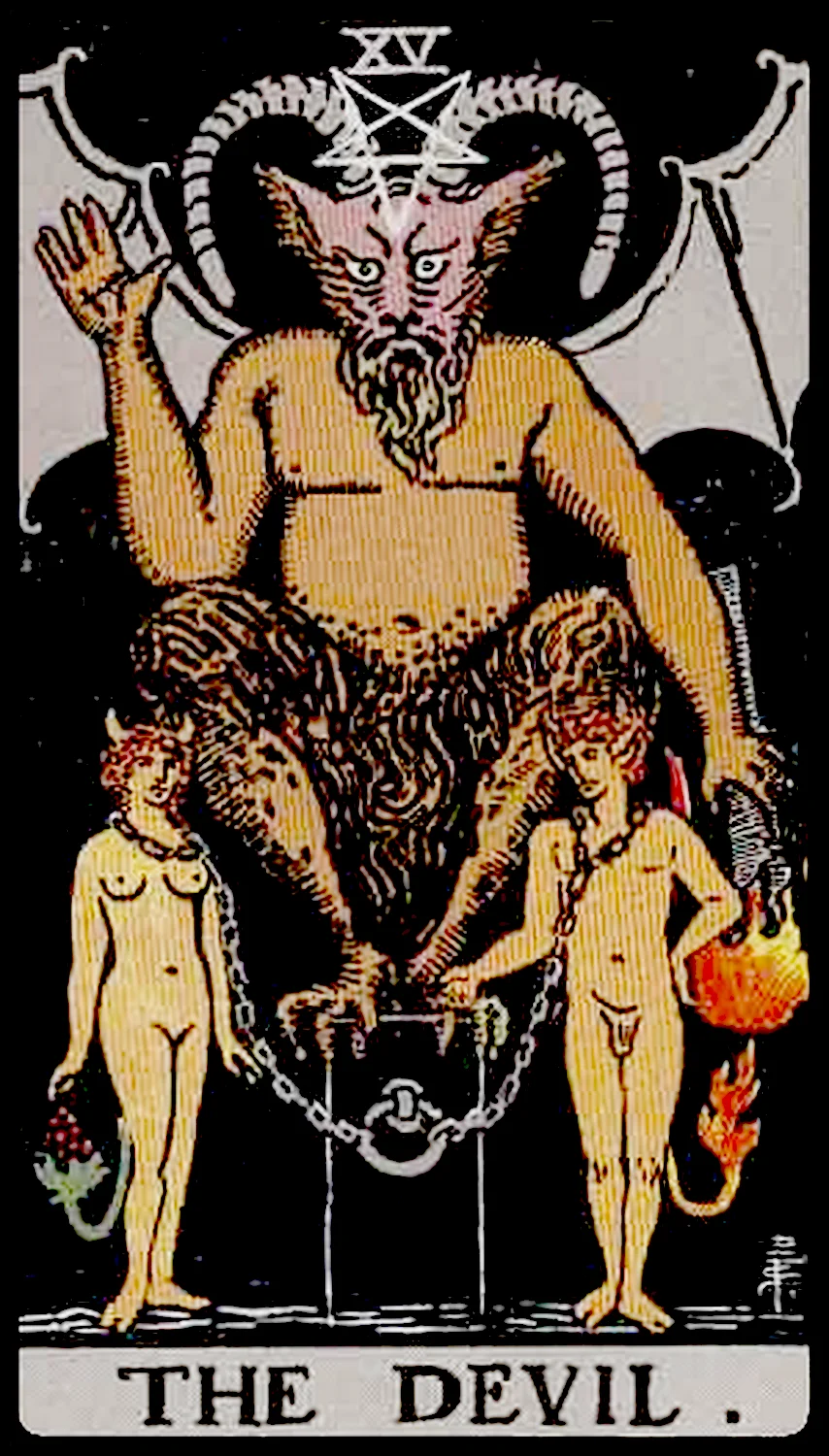
The third septenary opens the material world, and Papus opens it with fatality. Samech is an arrow — that which is loosed and cannot be recalled. The figures at the foot of the card are chained, but the chains are loose, and that is his whole point: material necessity binds by consent at least as often as by force. Fate here means the mechanical consequence of what has already been chosen. Divinatory sense: fate, fatality.
Reversed
The chain noticed — the loose collar seen for what it is, which is the first condition of taking it off. Reversed can equally be worse than upright: consent so complete that the bond has stopped being felt as a bond and is now described as freedom.
Correspondences
- Papus's number
- 15
- Hebrew letter
- Samech (ס)
- Hieroglyph
- An arrow — that which is loosed and cannot be recalled
- Septenary
- Third septenary (15–21), the world of Nature — first term, the active principle of the material world (Yod)
- Divinatory sense
- Fate; fatality
In a Spread
At the commencement, the matter begins in a consequence of something the querent agreed to earlier. In opposition, a dependency — and Papus would look for what it provides, because nothing stays chained for nothing. At equilibrium the arrangement is stable and that stability is the problem. As the result: necessity, which means the outcome is already determined by decisions taken before the question was asked.