The Fool
Major Arcana
Upright
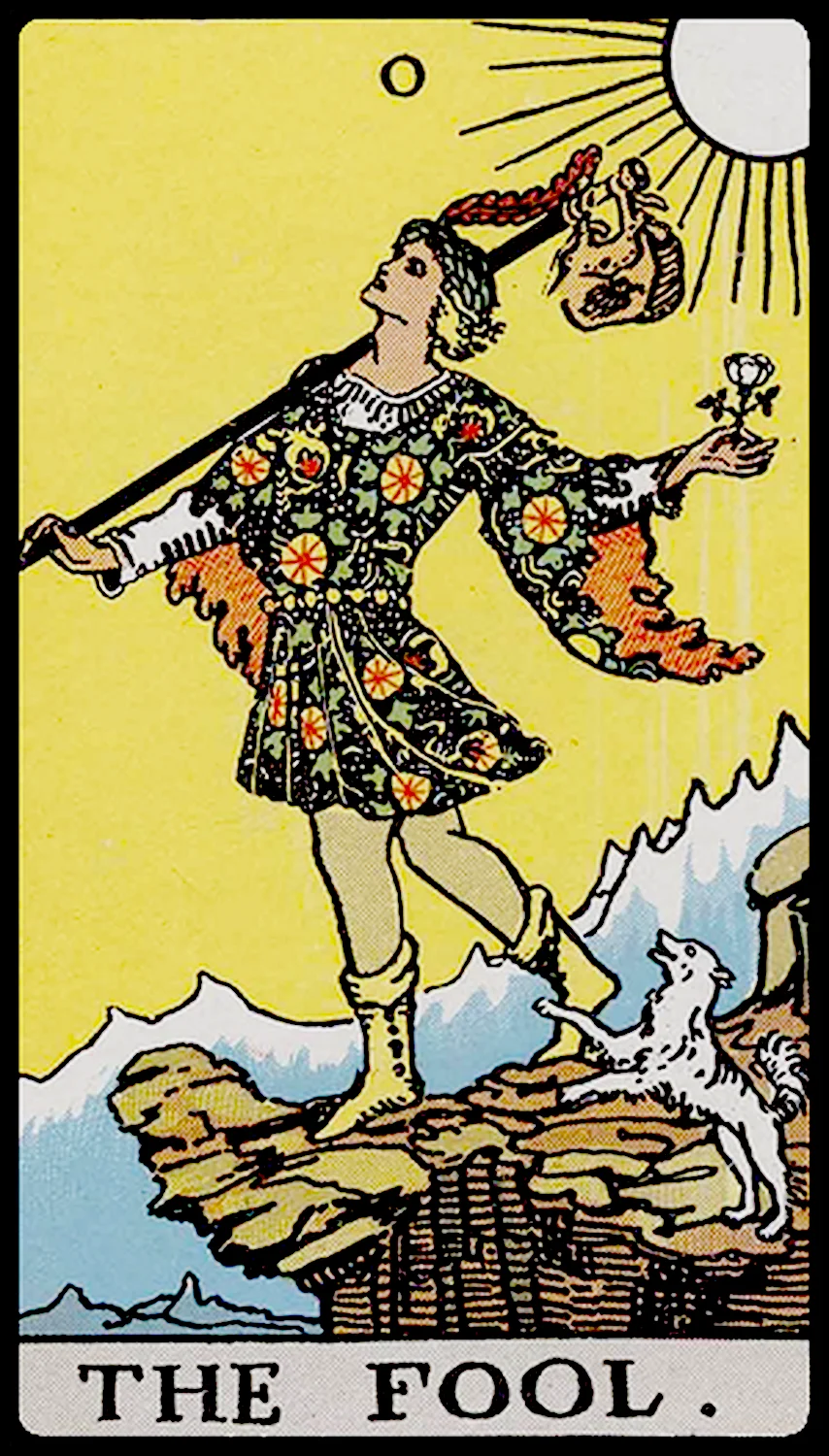
Papus places Le Mat apart from every other card: it is the one arcanum that bears no number on its own face, and that absence is the teaching. It is spirit fallen wholly into the senses — the wanderer with his pack, carrying the consequences of his own acts and reading none of them. Upright it speaks of a life run on impulse and appetite: not stupidity, but the will unattached, moving without a term to move toward. Papus's own divinatory word for it is folly, and behind that, expiation.
Reversed
Reversed, Papus's privative pole: folly that has stopped being innocent. The wandering is now chosen, the pack deliberately empty, the lesson refused rather than merely missed. Where the upright card is a man who has not yet learned, the inverted one is a man who has declined to — abdication of will dressed as freedom. It can also mark the point where the consequences the wanderer has been outrunning finally arrive.
Correspondences
- Papus's number
- 21 — Papus numbers Le Mat twenty-first, before Le Monde, not zeroth
- Hebrew letter
- Shin (ש)
- Hieroglyph
- A tooth; by extension the arrow — that which pierces and scatters
- Septenary
- Third septenary (15–21), the world of Nature — the seventh and transitional term, where the material series exhausts itself
- Divinatory sense
- Folly; the sensitive life; expiation
In a Spread
Papus reads a card by the place it falls in — commencement, opposition, equilibrium, result — not in isolation. The Fool at the commencement says the matter began without a plan and will not be steered by one. In opposition it is the drift that keeps the thing from settling. As the result it is the bluntest card in the deck: the question is being asked of a situation that has no term, and will keep costing until one is accepted.