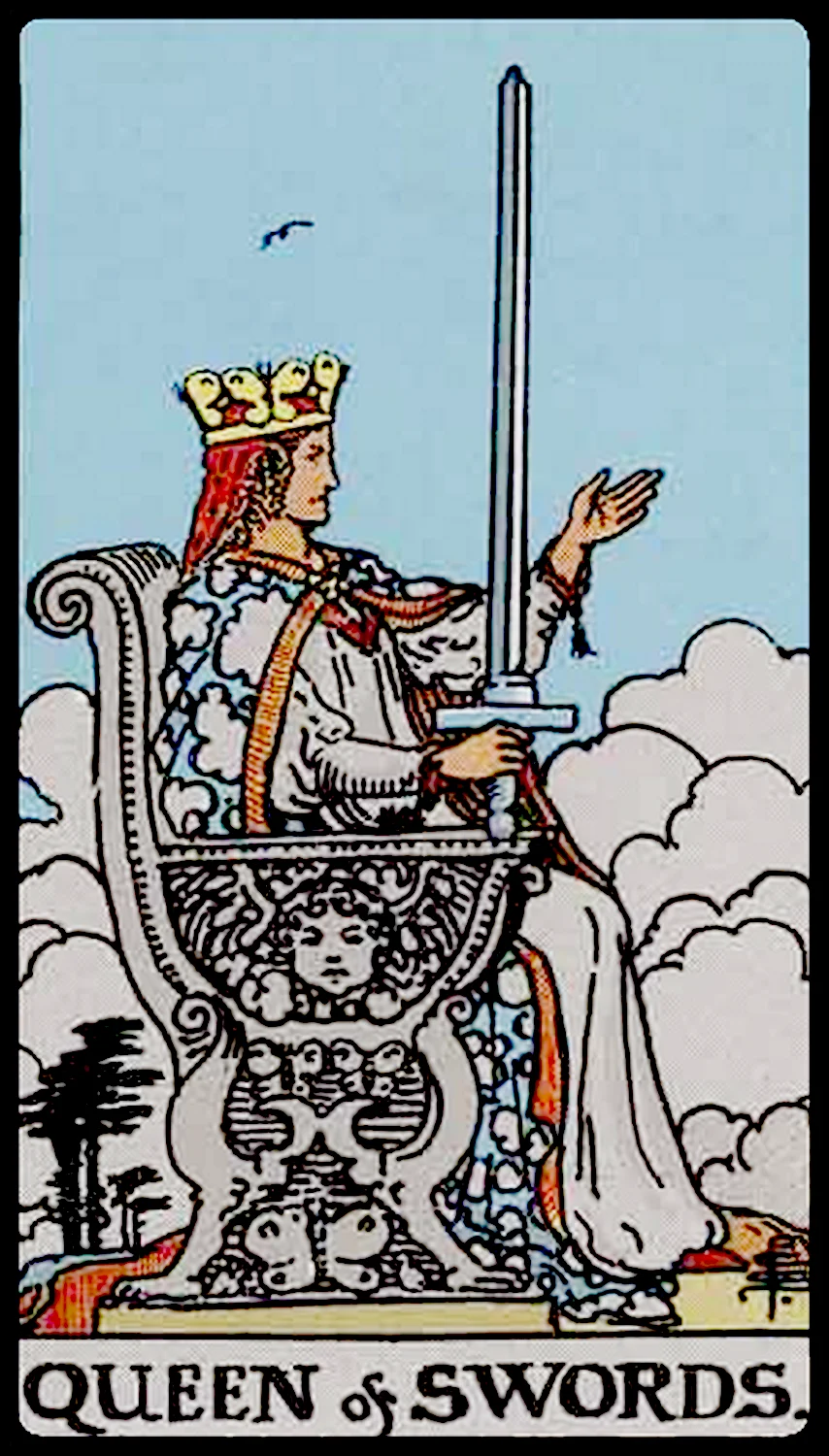
Queen of Swords
Swords
How This Card Is Derived
Papus gives no separate description of this card. It is derived from his system: Swords is Vau (ו), the equilibrating principle, the link between the two, acting in Yetzirah, the formative world; the Queen is He, the suit's passive principle embodied — it receives and reflects. The meaning below is that combination read out, not a quotation from him.
Upright
He of Vau: the receptive pole of the equilibrating suit. Swords are the friction where two forces meet, and the Queen does not add force to that — she receives it and reflects it back accurately. This is judgement rather than attack: the person who has taken the measure of a conflict and can state it without softening. Papus's passive term is never weak, it is exact; the Queen of Swords is the card of someone who sees the structure of a quarrel and is not moved by either side's account of it.
Reversed
Reversed, reflection turns cold and then turns on the person doing it. The same accuracy, applied without any object but itself: a mind rehearsing an old injury, mistaking the memory of a conflict for the conflict. It can equally mark a judgement that has been made and will not be revisited — the accurate reading kept long after the situation changed, so that it is no longer accurate at all.
Correspondences
- Suit
- Swords — Vau (ו), Yetzirah, the formative world
- Suit principle
- the equilibrating principle, the link between the two
- Rank
- Queen — He
- Rank role
- the suit's passive principle embodied — it receives and reflects
In a Spread
Court cards in Papus's method are as often a disposition as a person. At the commencement, the matter begins in someone's clear-eyed assessment of a conflict. In opposition, expect to be read correctly by someone who will not be flattered. At equilibrium she is what keeps the thing honest. As the result: the matter is settled by judgement rather than force, and the judgement will be exact rather than kind.